Tri-literacy with Sound Shapes
I haven't posted in awhile mainly because my laptop died and it's hard to post to SquareSpace from my phone. I'll have to either wait until I get back to the US or enlist the help of big C who's now fully employed and doesn't have as much free time as when he was a college student. However, I'm going to write a couple posts now, while the details are fresh.
Warning, this one is going to be somewhat technical so if your interest is more in travel and less in literacy feel free to skip it.
Literacy is a huge issue in Madagascar. 1 out of 3 adults are considered illiterate. This is caused by many related factors, including poverty, poor school attendance, and lack of learning by children who do attend school. I'm going to primarily focus on the third, as it's the one I know most about how to fix, and over time it impacts the other two. Education here is heavily influenced by the colonial French system. French is still the language of business and commerce, and French competency is seen as critical to getting a good job. I do not speak French, and have focused personally on learning Malagasy, yet even the vegetable sellers at the market insist on speaking French to me. Furthermore, French has infiltrated daily speech in Malagasy to the extent that sometimes I think I've learned a new Malagasy word only to later realize it's French. Even my highly intelligent and fairly well educated colleagues often will substitute a French word for a Malagasy word simply because it's shorter. Pure Malagasy is in danger of becoming an extinct language, but some form of Malagasy is still widely spoken in most homes.
Research shows that learning to read in their maternal language sets kids up for greater understanding of concepts later on. Moreover, it increases pride in one's culture and identity. In schools in Madagascar, much instruction happens in French, the language of colonial oppression.
Furthermore, English is beginning to replace French as the most useful world language, opening even more career paths.
Sekoly Kintana is a tri-lingual school, Malagasy, French, and English. We focus on a different language each day, speaking in that language as much as possible. We teach reading and new concepts in each kid's maternal language, with reinforcement lessons, in subjects other than reading, in the other two languages.
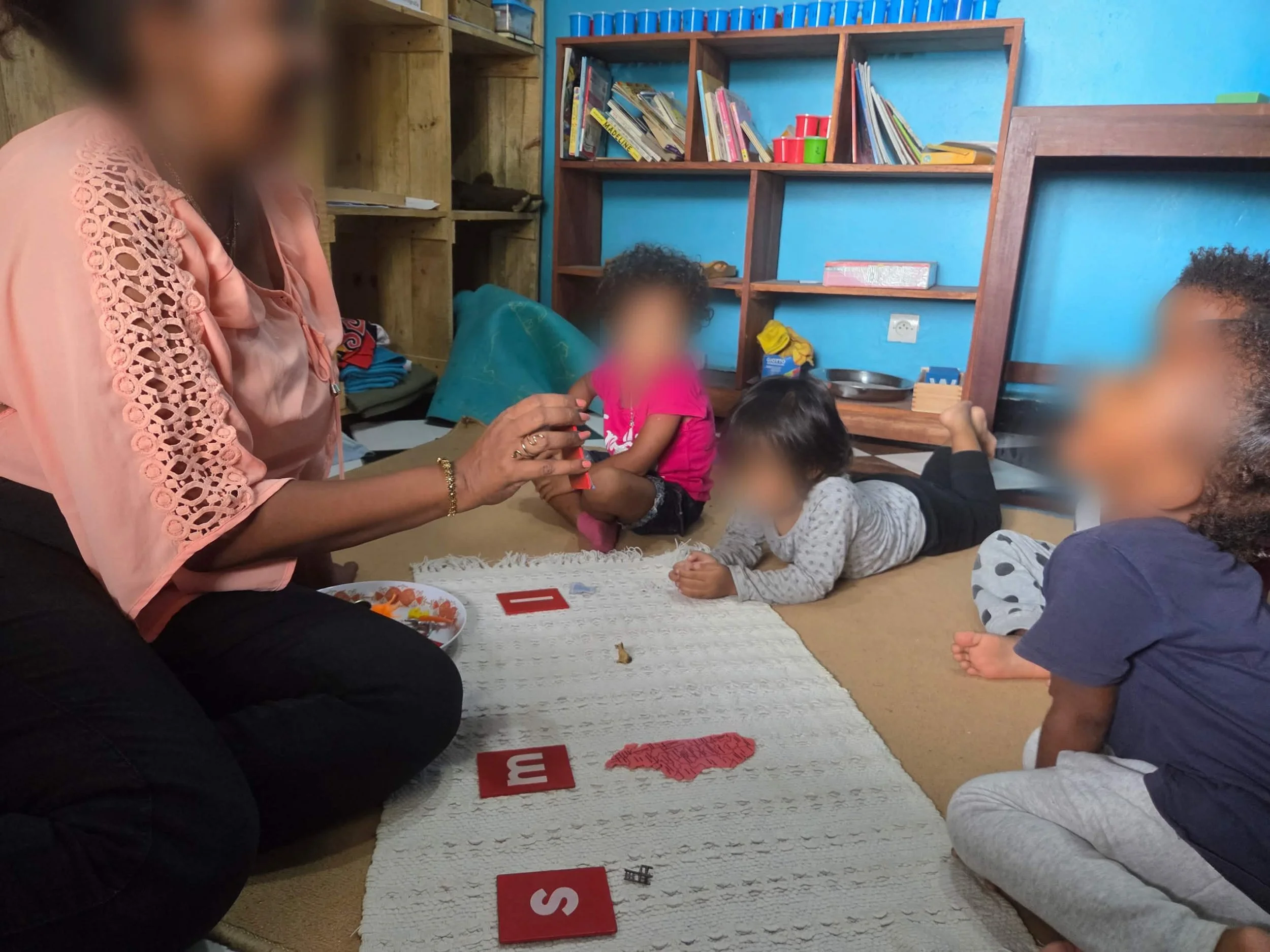
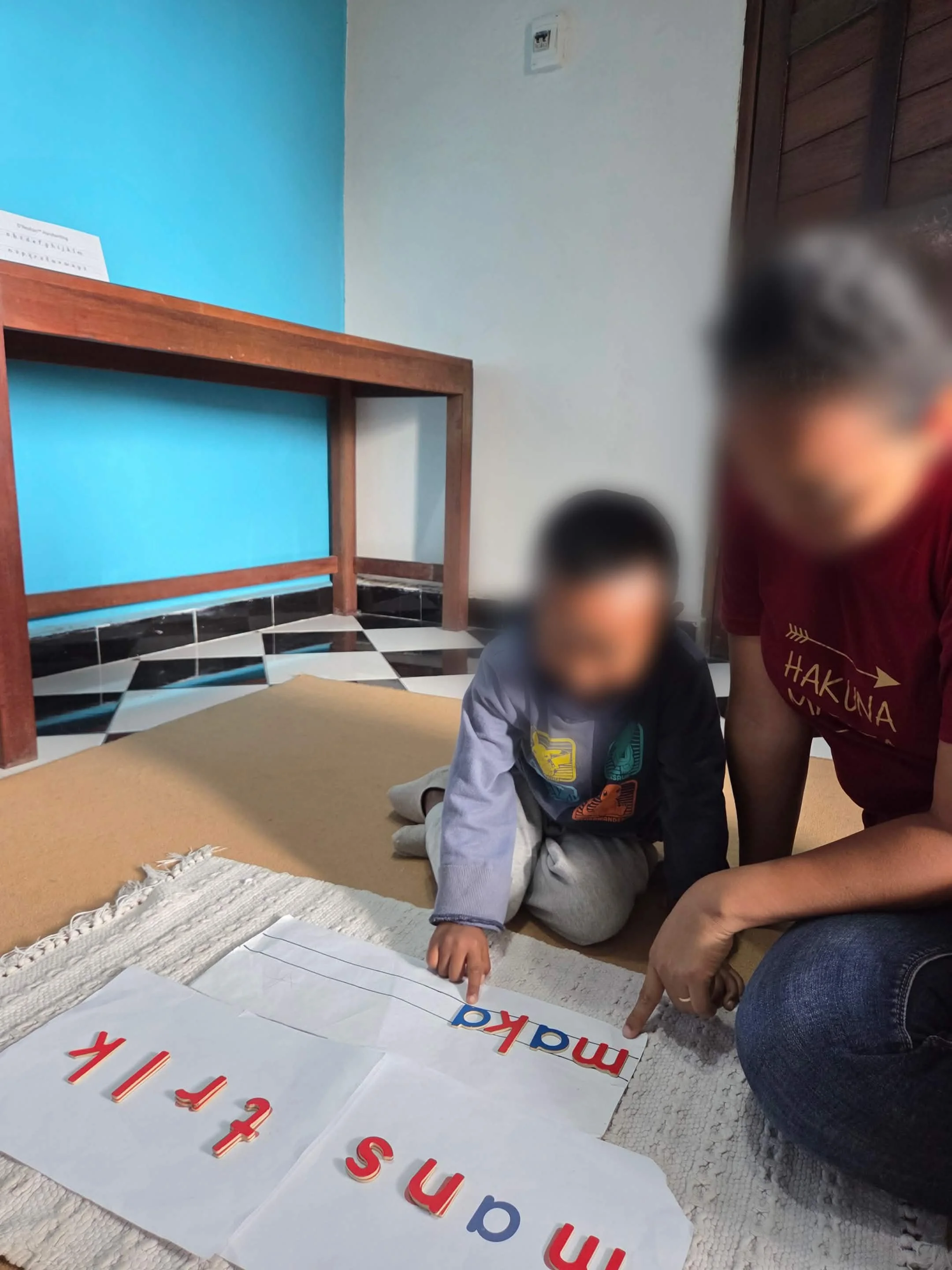
One piece of expertise that I bring, is a little known phonics instruction method called Sound Shapes Precision Phonics developed by my mentor Nancy Schwab of Nightingale Montessori.
https://www.nightingalemontessori.org/learn-nightingale/innovative-programs/ii-sound-scapes/
Maria Montessori developed her reading program for Italian children, and Italian is one of the most phonetically consistent languages. English, on the other hand, is only 84% phonetic. The rise in popularity of Montessori in the US coincided with a shift from phonics to a whole language approach, which has since fallen out of favor due to a drop in literacy. Many US Montessori programs developed a haphazard phonics approach, due to combining sight word memorization with Montessori methods. Nancy, a native English speaker who speaks Italian as a second language, was taught by Hilda Rothschild, who had been taught by Montessori herself. This put her in a unique position to fully understand what Montessori was doing on a conceptual level, and adapt it for English speaking children. Over the years, Nancy found that children who learned through her methods became competent readers, even if they showed early signs of dyslexia and had a history of it in their families.
Later research by Chris and Uta Frith showed that dyslexia is caused by physiological differences in the brain and is present in about 20% of the population, regardless of native language. However, people who learn to read in a pure phonetic language, such as Italian, don't develop the reading difficulties that English speaking kids do. Sound shapes effectively presents English phonics in such a way that the children respond as if they were learning a pure phonetic language, and then systematically learn the exceptions so that reading difficulties don't develop, as long as the children are taught at a young age and the program is fully implemented.
Malagasy is a pure phonetic language, French is not. Now imagine if you're a kid who mostly speaks Malagasy at home, has a brain that processes language differently, and is taught French at school. No wonder people have trouble learning to read. Sound Shapes is a concept based program, so I believed it could be adapted to both Malagasy and French by teaching the fundamental reading concepts in the same way, just with different words. In the case of French, we limit the words the children are exposed to until they learn the phonetic concepts to govern those words, similarly to the way we do in English. I was quite sure we would have good results getting kids reading in their maternal language, and I've been right. Now, with two months left in the school year, almost all the kids over 4 are able to read simple words. We have a couple three year olds, and one four year old who is showing signs of dyslexia, who are still learning sounds, but are making good progress. Our kids are mostly Malagasy speaking, with a few English and French, most of whom were already somewhat bilingual. The French program may still need a little tweaking, just because we haven't had enough kids go all the way through it yet.
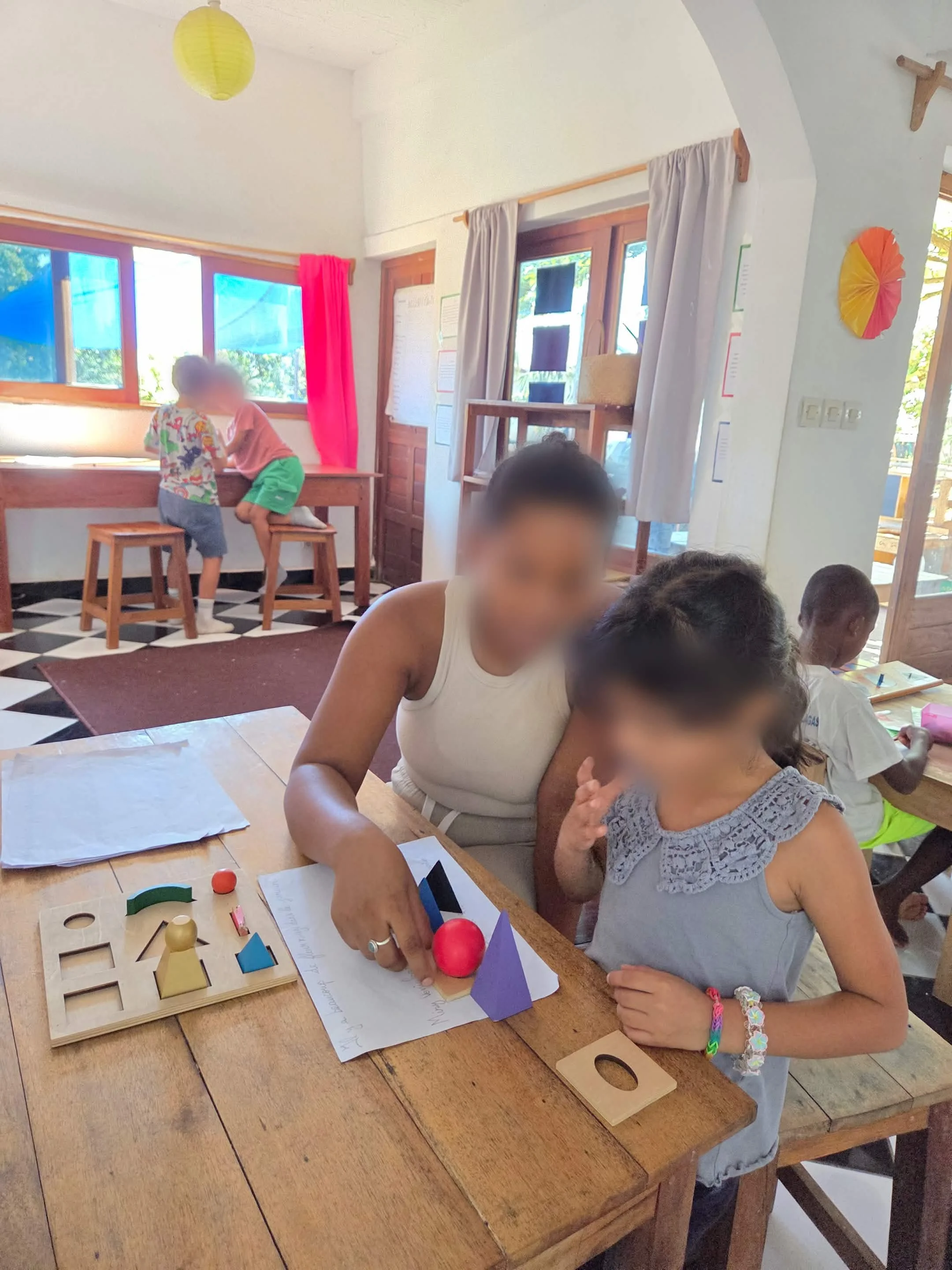
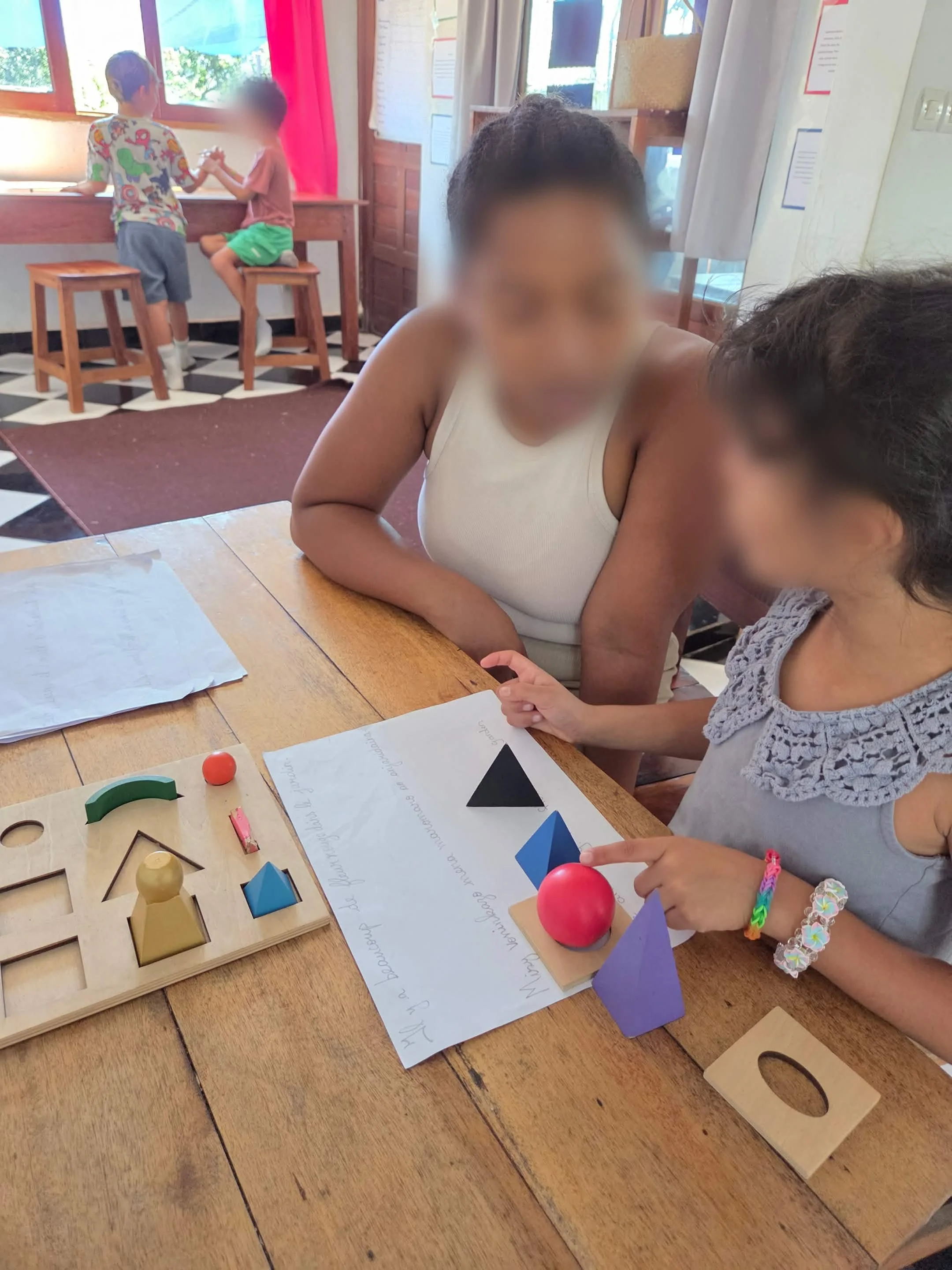
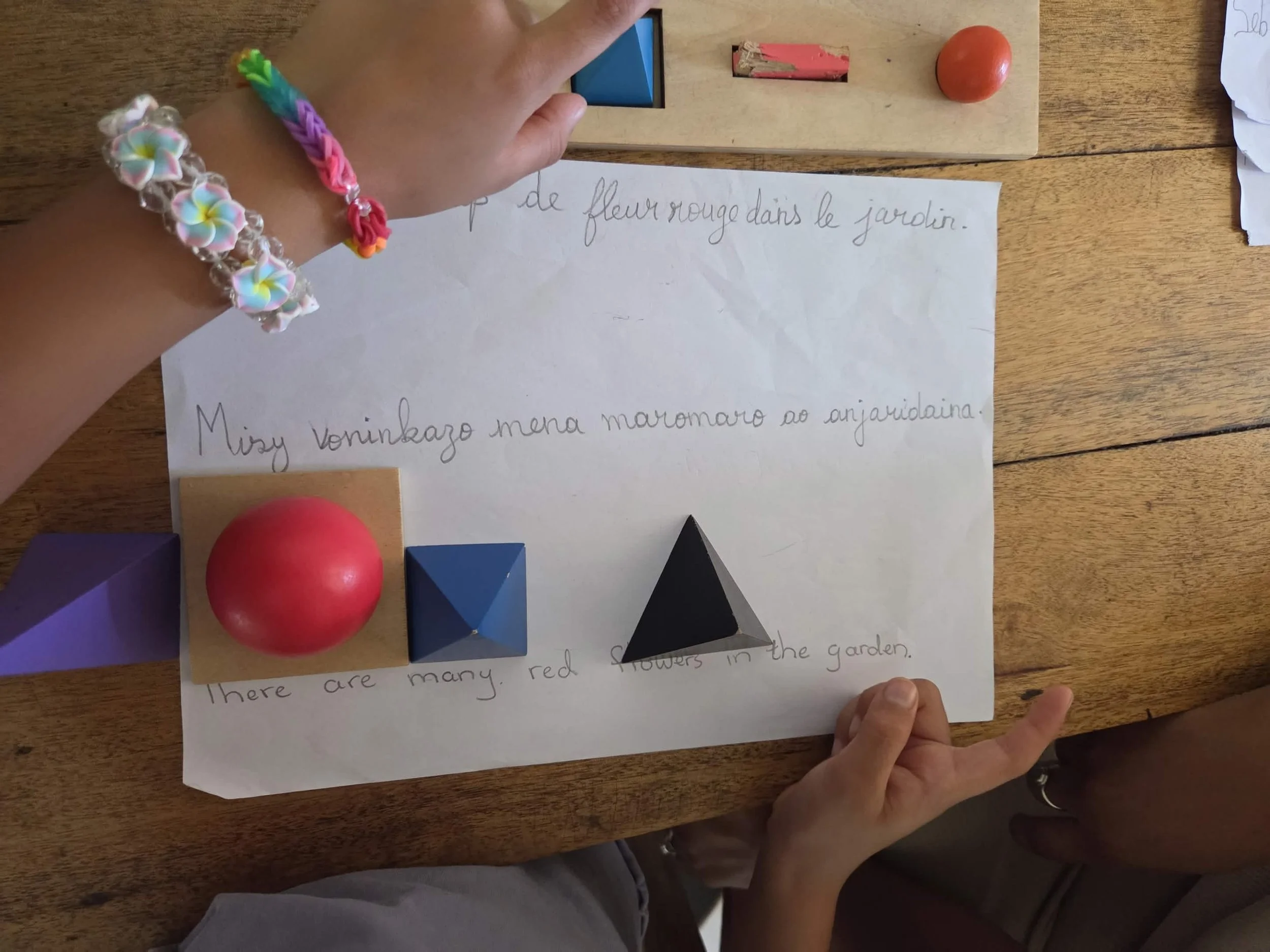
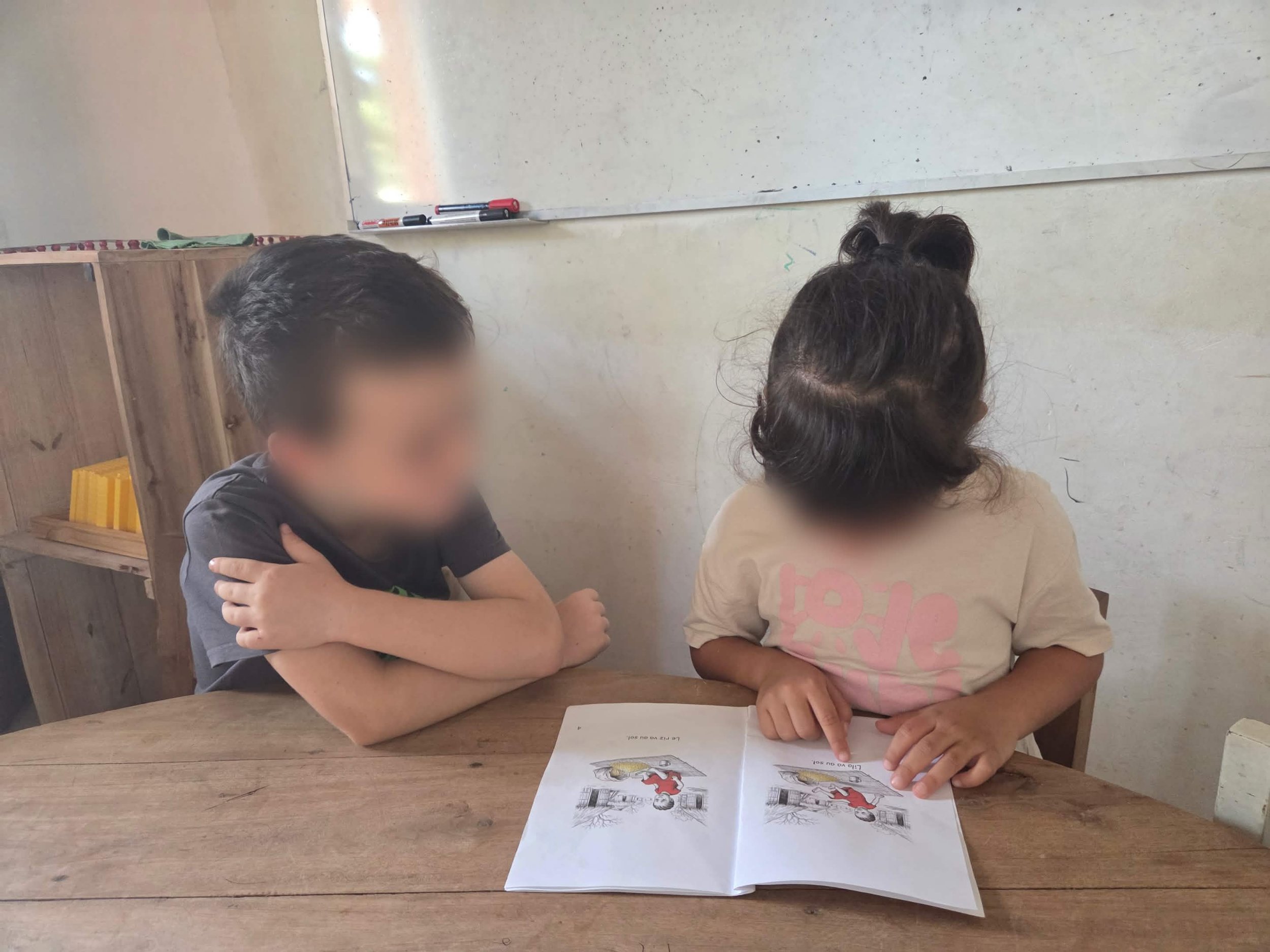
English speaking children who learn through Sound Shapes experience what is called a reading explosion, meaning that they begin to intuit the phonetic rules and exceptions without being directly taught each rule. What I didn't realize would happen, and what I find amazing and world changing, is how easily the 6 to 9 year olds have been able to start reading other languages. After reaching the explosion into reading in their own primary language, every single one of our 6 to 9 year olds at Sekoly Kintana, including the eight year old who didn't know a single sound in September, has started reading a second and/or 3rd language without direct instruction in that language. They hear it in the community so they have familiarity, and just start spontaneously reading it. No need to teach the second or third phonics system, they just intuit it the same way they intuit the complex phonics of the first language. This makes me think the entire world could be easily literate in multiple languages if we could just offer early exposure and sound shapes.
Malagasy has a unique grammatical structure of verb, object, subject which is used in only about 3% of languages. We use the Montessori grammar symbols with the 6 to 9 year olds by writing the same sentence in all three languages on a piece of paper and letting them manipulate the symbols to diagram each sentence. This gives them a physical understanding of how the grammatical structure of each language works, and the confidence to formulate sentences in their second and third languages. One child who had been primarily reading and writing in English chose to write a story in Malagasy, another chose to write a paper about his Timeline of Life Wax Museum animal in French. The encouragement and support they give each other in their various languages is beautiful to see.
We hired five interns and are keeping 3 for further training and a long term position. We don't need that many yet, but best to train them before I leave in late June, with the idea that the school will continue to grow. I'm really pleased with what the adults have learned, and feel the school will continue to thrive after I leave.